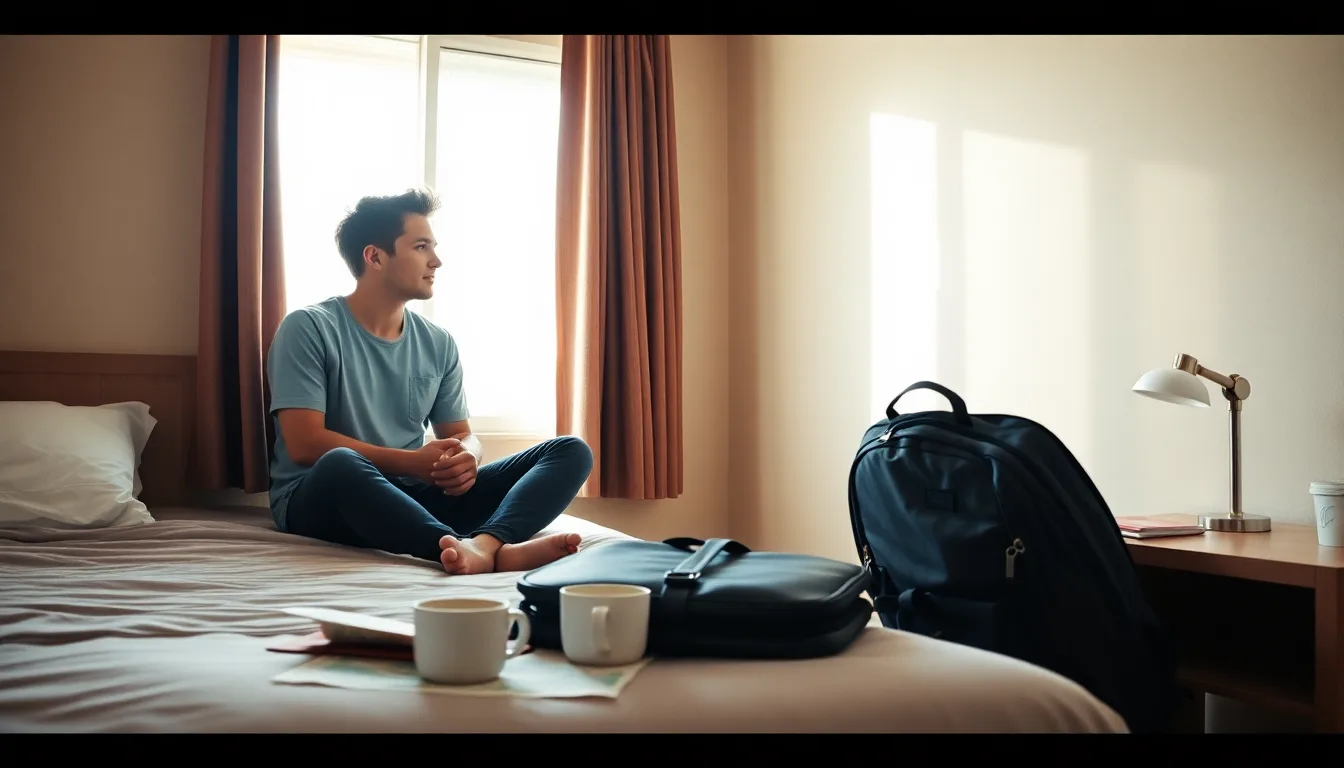
Here's a claim. A 48-hour weekend trip tells you more about someone than eight Wednesday-night dinners in a row. And it does it for under $300 if you're smart about it.
This is why Gen Z is weirdly addicted to going on trips with people they met four weeks ago. The math works. The risk, on the other hand, is its own whole thing.
What a weekend trip actually tests
Wednesday dinners reveal someone's best version. They showered. They picked the restaurant. They had a whole day of alone time to get emotionally fluffed before seeing you.
A weekend trip destroys all of that by hour 14. You see them:
- Waking up, unshowered, in a bad mood, before coffee.
- Making a decision about lunch when they're already hungry.
- Reacting when the plan goes sideways. Because it will.
- Dealing with a bathroom situation in a small space.
- Being bored with you, which is its own stress test.
You compress weeks of information into a 48-hour window. Whether that's a feature or a bug depends entirely on whether you actually like each other under pressure.
The "too early" question
People will tell you not to go on a trip with someone you've been dating for less than three months. People are wrong. The actual rule is not about time.
The actual rule is: have you had at least one mild conflict with this person and resolved it without anyone shutting down?
If yes, you can probably survive a weekend away. If no, you're basically speedrunning the first argument with a $200 Airbnb cancellation fee as a bonus prize.
The "one conflict" gate
Conflict doesn't have to mean a fight. It can be as small as:
- They were 40 minutes late to a plan and you told them it bothered you.
- You canceled last-minute and they said it hurt.
- You had different energy levels on a hangout and you talked about it.
If neither of you has said anything mildly uncomfortable out loud yet, a weekend together is a bad first test. The silence is doing a lot of work you haven't noticed.
Pick the right trip for the right stage
Not all weekend trips are equal. The stage of your situationship determines the trip.
- Early (4 to 8 weeks): Drive, don't fly. You want the option to bail without a reschedule fee. A 2-3 hour drive radius is ideal. Airbnb or a cheap inn.
- Middle (2 to 4 months): Short flight okay. You can handle a weather delay together without it becoming a breakup. You can also share a bathroom on a plane day without it being the most stressful thing that's ever happened.
- Further in: Actual travel. A 4-day weekend somewhere with a language you don't speak. This is a different level of test and most people shouldn't attempt it until they've done at least one domestic trip together.
Things to plan before you leave
This is where people who are bad at trips reveal themselves. You need, at minimum:
- One booked thing. A reservation, a tour, a ticket. Something that gives the trip a shape.
- A budget conversation. Yes, in 2026, you still have to have it. Who's paying for what, and is it roughly equal. "Let's just Venmo it out" is fine if you both mean it.
- Sleep plan. Are you actually planning to share a bed? If the answer hasn't been discussed you're about to have a real awkward moment walking into the room.
- Phone plan. How much of the weekend will you be on your phones. If one person wants to post and the other wants to disappear, that's a conversation, not a Friday-night discovery.
The 4 signs it's going well
You'll know you're in a good trip by Saturday afternoon. Watch for:
- Easy silences. You're in the car, no music, no one's talking, no one's anxious. This is the real test.
- Unplanned stops. One of you says "wait, let's check this out" and the other is immediately in. Flexibility is chemistry.
- You're not performing anymore. You wore the wrong shoes. You ate weird. You were in a weird mood for 90 minutes. Nobody freaked out.
- You want another day. You're genuinely disappointed it ends on Sunday. That's data.
The 4 signs it's going sideways
Also by Saturday afternoon, you'll know. Don't lie to yourself:
- Low-grade irritation. Tiny things are annoying you. The way they chew. How long they take in the bathroom. How they respond to waiters. It won't get better in a shared Airbnb.
- One of you is on your phone way more than usual. That's someone hiding from the situation.
- Conversations are getting shorter. You ran out of things to say by dinner on night one. That's a yellow flag on a weekend trip. A red flag on a week.
- You're already looking forward to being home alone. Respect that feeling. It's rarely wrong.
"The best trips aren't the ones where nothing goes wrong. They're the ones where something does and neither of you becomes a different person about it."
How to leave a bad trip gracefully
If it's clearly not working by Saturday afternoon, you do not have to perform a great Sunday. You can:
- Leave a few hours earlier than planned. "I think I want to head back tonight" is a complete sentence.
- Split the last meal into solo time. A solo walk. A solo coffee. You don't have to be a couple from wake up to bedtime.
- Not talk about "us" in the car on the way home. The conversation can happen later in the week when you're both not exhausted and emotionally waterlogged.
And if it's clearly not going to continue, you do the actual talk within three days of getting home. Not on the trip. Not in the car. Not by text the next morning. In person, one conversation, clean exit.
The cheap trip that punches above its weight
If you want a format that works disproportionately well, try this. Two-night trip. Two-hour drive from home. Airbnb for around $120 a night split in half. One booked activity on Saturday (a hike, a tasting, a small-town museum, a concert in a weird venue). Sunday is loose.
Total cost under $300 per person including food and gas. Total data about whether you should keep seeing this person: roughly infinite.
Try this
Next person you're three or four dates deep with, don't propose "a trip" — propose something with a shape. "There's a night market in [nearby town] the last weekend of the month. We should go for the night and drive back Sunday." Specific, low-stakes, easy to say yes to. If it works, you know a lot more about each other by Monday. If it doesn't, you had a Saturday.