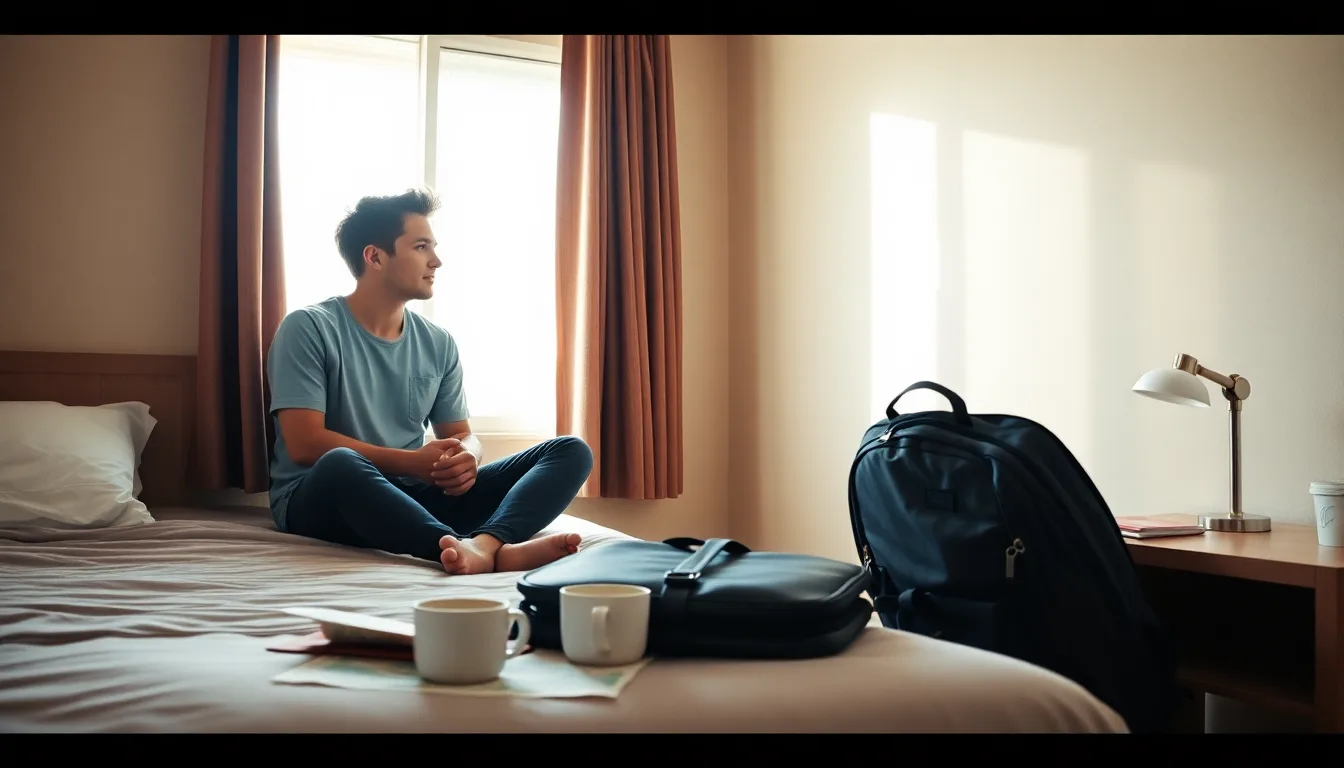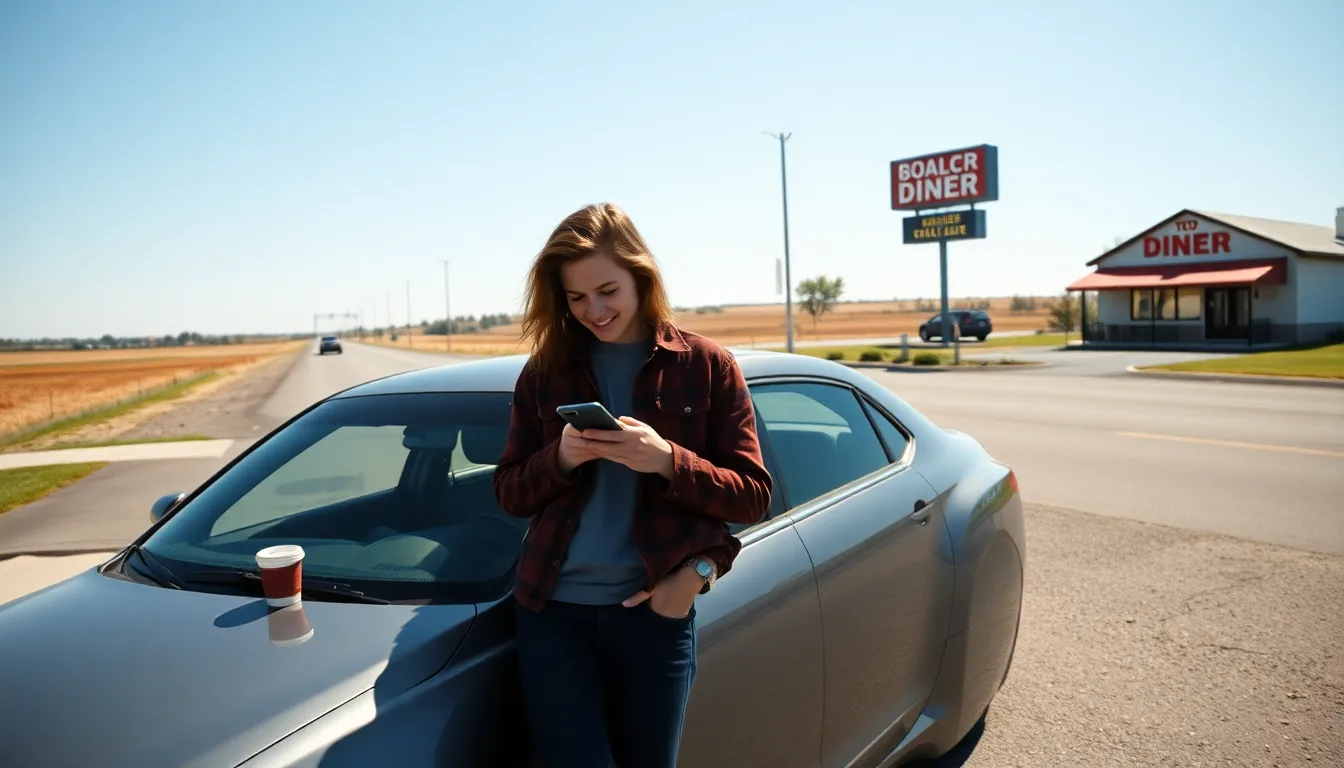
A first date that's also a 4-hour drive is an absolute unit of a decision. You are agreeing to share a small enclosed space with a stranger through at least one rest stop, one playlist fight, one bathroom situation, and one conversation about parents.
It's either going to be one of the best first dates you ever have, or you're going to text your friend "SOS" from a gas station in hour three. Sometimes both.
Why anyone does this
The appeal of a road trip first date is that it skips the boring part. No coffee date. No "so what do you do?" over a $14 cocktail. You are just in the car, having the big unfiltered version of the conversation, whether either of you planned to or not.
A car is basically a moving therapy couch. You're not maintaining eye contact. You're looking out the same windshield. It's the most honest venue for talking that exists, which is a known psychological thing — parallel gaze lowers defenses.
The tradeoff is that if you picked wrong, you have just committed to several hours of more of it.
The categories of road trip first date
Three categories, all different risk profiles.
1. The day-trip
Drive to a destination, spend a few hours there, drive back. Total time: 6-10 hours. No sleeping arrangements in play.
Lowest risk. Best version of the format for a first date. You get the intimate car time without the Airbnb-logistics conversation.
2. The overnight
Same idea but you're sleeping somewhere. This is not a first date. This is a weekend trip sold as a first date. Do not do this with someone you've never met in person. Please.
3. The shared-errand drive
One of you has to drive somewhere for a real reason — picking up furniture, going to a wedding an hour away, visiting a family member — and the other joins. Technically a first date, technically also a small logistics errand, weirdly low pressure.
This one is underrated. Because the trip has an actual purpose, no one has to perform "this is a date." You just... are one, by the end of the drive.
The green lights
If you're considering a road trip first date, it's probably okay if at least three of these are true:
- You've video-called or voice-called the person for at least one real conversation already.
- You've exchanged enough messages that you've had at least one slightly unserious or playful exchange.
- You have mutual friends or some kind of verifiable social tie.
- You have a specific reason for the trip (a destination, an event, an errand). "Let's just go somewhere" is a red flag because it implies the drive is the point, which is too much for first-meet.
- You can both legally and comfortably drive, so neither one is trapped in the passenger seat with no exit.
The red flags
If any of these are true, do not make your first date a road trip:
- They proposed it. You don't feel great about it. Trust that.
- You have never seen them on video. A photo-only dating app situation is not ready for a 4-hour car.
- Only one of you is driving, and the other person doesn't drive. You need a way out if the energy goes bad.
- No clear destination. "Let's just drive and see where we end up" is a movie trope, not a real first date.
- You haven't told at least one friend the plan, the destination, and the person's full name.
The buddy-check protocol
Non-negotiable for this format. Before you leave:
- Text a friend the person's full name and their dating app profile screenshot.
- Share your live location for the whole day via Find My or Google Maps sharing.
- Agree on check-in times — at least once at the destination, once on the drive back, and once when you're home.
- Agree on a code phrase that means "come get me" vs. "all good."
Your friend does not have to be a private detective. They just have to know. You can do the same for them next time they do something similarly high-variance.
The first 45 minutes
Here's where the format is most honest. Both of you are about to find out whether you can actually be in a car together without it being weird.
Watch the following in the first 45 minutes:
- Music dynamic. Do they ask what you want to play? Do they assume their playlist? Do they skip a song of yours without asking?
- Phone behavior. Are they on their phone whenever they're not driving? Are they texting someone the whole time? That's a signal.
- Driving style. If they're driving, watch how they handle frustration. Horn-happy? Tailgates? Swears under their breath? This is real data.
- Conversational rhythm. Are they asking you questions back? Are they holding silence well? Are they interrupting?
Usually by the 45-minute mark you already know if the rest of the day is going to be good or long. Trust that.
The rest stop test
This is real and it's underrated. How someone behaves at the rest stop tells you almost everything.
- Do they buy something for you without making a thing of it?
- Do they hold the door? Not as a trad gesture but as a "normal human noticing you" gesture.
- Do they get stressed about how long you take in the bathroom?
- Do they make eye contact with the cashier?
- Do they get in the driver's seat with an empty gas tank and a judgmental comment?
None of these are dealbreakers. All of them are signal. Take the combined vibe and file it.
What actually happens at the 3-hour mark
Hour three is when the performance drops. You've talked about work, family, school, the one weird hobby. The small talk is exhausted. Now it's real talk or silence.
Good dates: real talk. You end up telling them something you didn't plan to. They end up saying something about an old relationship that was weirdly wise. The car gets quiet between stretches but not awkward.
Bad dates: silence that feels like a hostage situation. One of you starts checking their phone more. Conversation restarts are flat. Both of you are counting the miles left on the map.
Don't pretend a bad hour three is fine. Suggest an unplanned diner stop, split up for 20 minutes, re-set the energy. If it comes back, great. If not, you still have the ride home to survive with dignity.
The drive back
The drive back is a different date than the drive out. Both of you are tired. One of you might be a little emotionally wrung out. The novelty is gone.
A good sign: the drive back is quieter than the drive out and it doesn't feel bad. You're comfortable enough to be tired next to each other.
A bad sign: the drive back is longer than the drive out even though it's the same miles. Time has stretched because you're not having fun anymore.
"The drive back is where the test actually happens. Nobody performs on the drive back. That's the version of them you'll get on a Tuesday."
When it works, it really works
Road trip dates that land become a memory that outlasts a lot of longer relationships. There's a specific intimacy to sharing a car, a bad diner, and a sunset with someone new. People talk about those first dates years later, even if the relationship didn't last.
There's a reason for that. The format produces real conversation in a compressed window. It's harder to fake for 6 hours than for 45 minutes at a wine bar. If you come out of it still wanting a second date, the second date is probably already not a first-date-level date. You're past that.
When it doesn't work, bail gracefully
If the drive is halfway over and you know, propose cutting the destination short. "Honestly, I kind of just want to grab food, walk around, and head back." Removes the pressure of arriving at a destination neither of you wants to be at anymore. Gets you home three hours earlier than you thought. Saves both of you the bit.
The small experiment
If a road trip feels too big, try the suburb run. An hour out of the city each way to one specific thing — a bookstore, a thrift mall, a lake. Total time 3-4 hours. You get 80% of the intel of a road trip for 40% of the commitment. If that works, you've earned the longer version for date three.